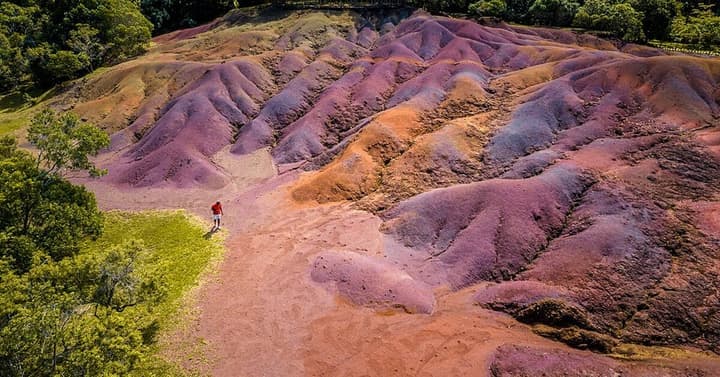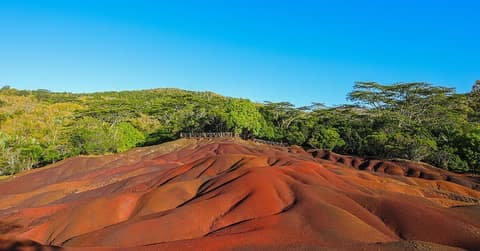
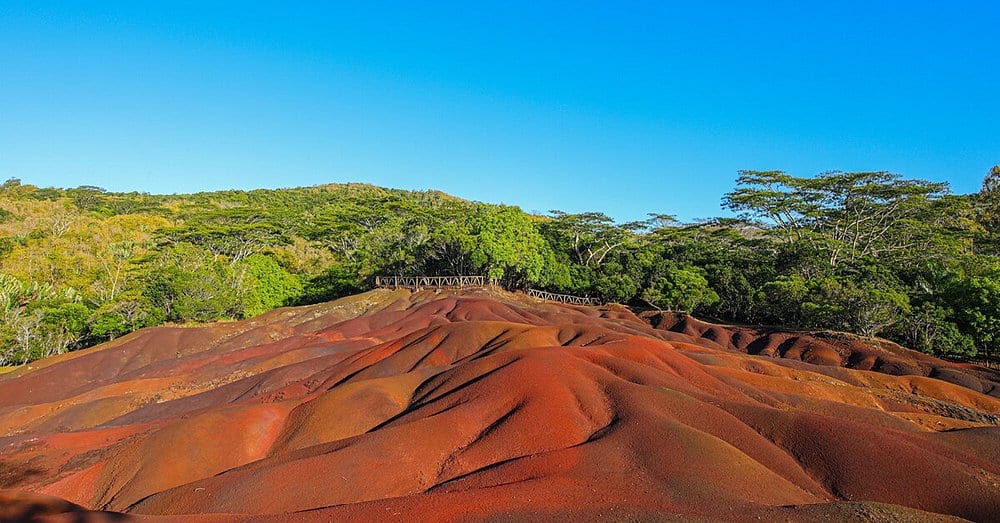

The Seven Colored Earth in Chamarel is one of the most recognizable natural sights in Mauritius. It is a compact area of gently rolling dunes where the soil shifts through visible shades of red, brown, purple, ochre, yellowish and greenish tones. The site is in the Chamarel area in southwest Mauritius, close to Chamarel village and La Gaulette, so it fits naturally into a day exploring this part of the island.
The main reason to visit is to see a landscape that feels completely different from the beaches, lagoons and tropical forest scenery Mauritius is famous for. The colors are most interesting in good light. They are not always as intense as heavily edited travel photos suggest, but the subtle bands and changes in tone are exactly what make the place feel real. Arrive expecting a rare natural pattern rather than a neon postcard, and the visit is much more rewarding.
Why the earth has different colors
The colors of the Seven Colored Earth are linked to the volcanic origin of this part of Mauritius and to the long transformation of minerals in the soil. Iron and aluminum compounds contribute to the different tones as the earth oxidizes and weathers. Over time, softer material formed sandy ridges, while rain and wind helped reveal the flowing shapes you see today.
One of the curious things about the site is that the colors do not simply blend into a single brown surface. You can still see separate streaks, patches and waves. As the sun changes, some shades become clearer while others fade back. This means the same viewpoint can look different in the morning, at midday and later in the afternoon.
What to see at the site
The Seven Colored Earth area itself is not large. Most visitors walk along the marked paths and view the dunes from designated lookout points. Walking on the colored earth is not allowed, which helps protect the fragile surface and preserve the pattern of the dunes. It is best to think of the visit as a short but memorable stop for observation, photos and a little geology, not as a long walk.
For photos, try more than one angle. Wide shots show the shape of the dunes, but close framing can capture the lines of color more clearly. The contrast between the earth and the surrounding greenery also works well, especially when the light comes from the side and gives the ridges more depth. If the sun is directly overhead, the scene may look flatter.
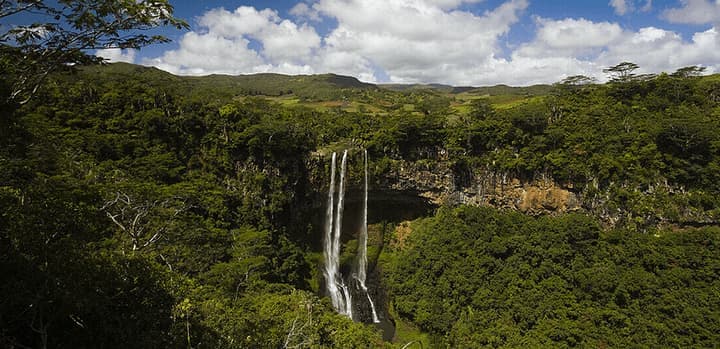
Many travelers combine the Seven Colored Earth with Chamarel Waterfall and other stops in the southwest. This is usually the most satisfying way to visit. If you are staying in La Gaulette, Le Morne, Flic en Flac or elsewhere on the west coast, the site can become part of a varied day rather than a single-purpose drive.
Best time to visit
A sunny day is usually best because the color differences are easier to see. Based on common visitor experience, the most pleasant light is often before late morning or later in the day, once the harshest midday light has passed. Morning can be calmer and softer, while late afternoon may give the dunes more texture.
If you want photos with fewer people at the lookout points, try to arrive before the main tour flow. The site can feel busy at popular times, but most visitors do not stay very long, so viewpoints usually clear in waves. Give yourself a little buffer rather than rushing, especially if you are traveling with children or trying to combine several attractions in one day.
How to plan your route
The easiest way to visit is by car as part of a southwest Mauritius route. The Seven Colored Earth pairs well with Chamarel, scenic roads, natural viewpoints and the Le Morne coast. Driving independently gives you more control over timing, which matters if you want better light or a slower pace.
If you are not driving, a taxi with waiting time or an organized tour can work well. Before setting off, agree on the route clearly: which stops are included, how long you will have at each one, where the driver will wait and whether you return to the same hotel. Distances in southwest Mauritius can look short on a map, but roads may curve through hills and take longer than expected.
For a self-guided trip, bring water, sun protection and comfortable footwear. The viewing area does not require serious hiking, but heat and humidity can make even short stops tiring. If your day also includes waterfalls, viewpoints or village stops, dress for easy movement rather than just for the beach.
Is it good for children?
The Seven Colored Earth can be a good family stop if children are comfortable with short visits and car travel. There is no long walk required, and the dunes are easy to explain as a natural color palette created by the island. The main limitation is that children cannot run on the dunes or touch the protected earth, so very young visitors may lose interest quickly.
To make the stop more engaging, turn it into a short observation game. Look for different shades together, compare the colors in sun and shadow, and move between viewpoints to see how the pattern changes. After that, continue to a stop where children can move around more freely or rest.
Practical tips
- Do not judge the place by over-edited images online; in reality the colors are often softer and strongly affected by light.
- Choose sunny weather when possible and avoid relying on the flat midday light for the best photos.
- Stay behind the barriers and do not take sand from the dunes, as the surface is fragile.
- Plan the Seven Colored Earth as part of a Chamarel or southwest route rather than the only activity of the day.
- If you visit with a tour, check in advance how much time you will have at the viewpoint.
- After rain, paths and surrounding areas can be damp, so comfortable shoes are more useful than beach flip-flops.
Reviews and expectations
Visitor impressions often depend on expectations. Travelers who expect a vast desert of bright, sharply separated colors may find the site small and more subtle than they imagined. Travelers who see it as a rare geological stop in the beautiful Chamarel area usually appreciate the unusual landscape, the easy viewpoints and the chance to add something non-beachy to a Mauritius itinerary.
The site works best when it is connected with the wider nature of the southwest: green hills, waterfalls, scenic roads and the Le Morne coastline. In that context, the Seven Colored Earth feels less like a quick box to tick and more like one piece of Mauritius's volcanic and tropical character.
Is it worth visiting?
The Seven Colored Earth in Chamarel is worth visiting if you are exploring southwest Mauritius and want to see one of the island's most unusual natural scenes. It is not a long hiking destination or a place that fills several hours on its own. It is a compact, photogenic and educational stop. Come with realistic expectations, choose good light when you can, and combine it with other Chamarel sights for the strongest overall experience.